When you bring home a puppy, parasite prevention needs to be handled early. A lot of owners focus on beds, toys, and food, then leave worming and flea control until there is already a problem. That is the wrong order.
Puppies are more vulnerable than adult dogs. Their immune systems are still developing, their bodies are smaller, and parasite burdens can affect them faster. A solid prevention plan helps protect your puppy’s health and avoids the mess of dealing with fleas, worms, or tick exposure after the fact.
The right puppy parasite prevention plan depends on age, weight, lifestyle, product label instructions, and veterinary advice. Do not guess. Do not use leftover treatment from another dog.
What parasites are puppies most at risk from?
The main parasite risks for puppies usually fall into two groups: internal parasites and external parasites.
Internal parasites
Young puppies are commonly affected by intestinal worms. These may include:
- roundworms
- hookworms
- whipworms
- tapeworms
These parasites can contribute to digestive upset, poor growth, a bloated-looking belly, low energy, and poor coat condition.
External parasites
Puppies may also be exposed to:
- fleas
- ticks
Fleas can spread quickly and create a household problem fast. Ticks are especially important in higher-risk regions and for puppies spending time outdoors.
Why early parasite prevention matters
Parasite prevention is easier than parasite treatment. Once an infestation gets going, the problem usually becomes more expensive, more stressful, and more difficult to manage.
Starting early helps reduce the risk of:
- intestinal worm burdens
- skin irritation from fleas
- flea infestations in the home
- tick exposure in high-risk environments
- missed treatment windows during rapid puppy growth
Puppy deworming schedule: what owners need to know
Many new dog owners search for a puppy deworming schedule because they want a simple fixed answer. The reality is that schedules vary depending on the puppy’s age, body weight, treatment history, and the product being used.
What matters most is not memorizing a generic schedule. It is making sure the puppy’s deworming plan is appropriate for:
- their current age
- their current weight
- what treatments they have already received
- what parasites need to be covered
Do not assume that a product suitable for an adult dog is suitable for a young puppy. Check the minimum age and weight on the label every time.
When can puppies start flea and tick treatment?
This depends on the product. Different flea and tick treatments have different minimum age and minimum weight requirements.
Before giving any treatment, check:
- minimum age
- minimum weight
- whether the product covers fleas only or fleas and ticks
- how often it needs to be given
- whether the product is suitable for the puppy’s breed, size, and health status
This is one of the biggest mistakes new owners make. Some start too early with the wrong product. Others wait too long because they think a puppy is too young to need prevention.
How to choose the right parasite prevention product for a puppy
Do not choose based on branding alone. Choose based on fit.
1. Age suitability
The product must be approved for the puppy’s age.
2. Weight suitability
Dosing should match the puppy’s current weight. Puppies grow quickly, so weight should be checked regularly. If you need a broader starting point, browse the Smartway dog flea, tick and worming range.
3. Parasite coverage
Some products cover worms. Some cover fleas and ticks. Some offer broader parasite protection. Know exactly what the treatment covers and what it does not.
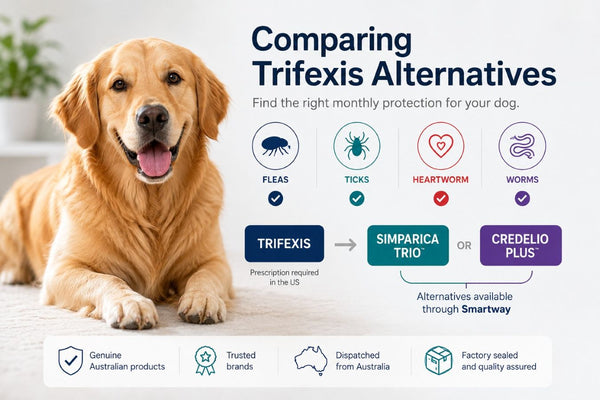
For example, if you are comparing wider monthly coverage, you can review the NexGard Spectra for Dogs collection or the Credelio Plus for Dogs collection. If you only need flea and tick coverage, options like Simparica, Bravecto for Dogs, or weight-specific NexGard chews may make more sense depending on your dog’s needs.
4. Lifestyle and location
A puppy in an apartment with limited outdoor exposure may have a different risk profile from a puppy spending time in grass, kennels, parks, rural areas, or tick-prone environments.
5. Ease of use
The best parasite prevention product is one the owner can use correctly and consistently.
Common puppy parasite prevention mistakes
- guessing the puppy’s weight
- using a treatment meant for adult dogs
- assuming one product covers everything
- waiting until signs appear
- missing repeat doses
- not checking what the breeder has already given
Signs a puppy may already have a parasite problem
Even with a prevention plan in place, owners should still watch for warning signs such as:
- visible worms in stool
- diarrhea
- vomiting
- excessive scratching
- flea dirt
- pale gums
- poor weight gain
- skin irritation
- low energy
If your puppy shows any of these signs, speak to a veterinarian promptly.
Puppy parasite prevention checklist
- ask the breeder what parasite treatments have already been given
- record the dates and product names
- weigh your puppy accurately
- check the age and weight requirements on the product label
- confirm what parasites need coverage in your area
- set calendar reminders for repeat treatments
- review the plan regularly as your puppy grows
If you are comparing treatment options, start with products that match your puppy’s current weight and age, then narrow by parasite coverage and treatment frequency. For very young small dogs, a puppy-specific topical option like Advocate Spot-On for Puppies & Dogs up to 9 lbs may be a useful reference point, depending on age, weight, and veterinary advice.
Frequently asked questions
How early should puppy parasite prevention start?
That depends on the puppy’s age, treatment history, body weight, and the specific product being considered. The correct starting point should always match the product label and veterinary advice.
Can one product cover worms, fleas, and ticks?
Some products cover multiple parasites, but not all do. Always check what is included and whether separate treatment may still be needed.
Can I use an older dog’s treatment on a puppy?
No. Never assume a treatment meant for an older or heavier dog is suitable for a puppy.
Why does body weight matter so much?
Because accurate dosing matters. Puppies grow fast, and using the wrong weight band can lead to poor protection or inappropriate treatment use. For all-in-one monthly options sized by weight, you can also compare the Credelio Plus range or the NexGard Spectra range.
Final word
Puppy parasite prevention is not something to improvise. Start early, choose carefully, dose by current weight, and follow the product label closely. When in doubt, ask your veterinarian before giving treatment.
Important note: Always read the label and consult your veterinarian before starting any flea, tick, or worming treatment for a puppy. Suitability can vary based on age, weight, breed, health status, and local parasite risk.
Andrew Davies
Founder & Pet Care Specialist — Smartway Pet Supplies
Andrew founded Smartway Pet Supplies to help US and Canadian pet owners access genuine, brand-name parasite prevention medications at fair prices. With years of experience navigating the Australian veterinary products market, he writes practical guides to help pet parents make informed decisions about flea, tick, heartworm, and worming treatments.
About Smartway Pet Supplies →