Does Flea and Tick Season Actually Have an Off-Switch?
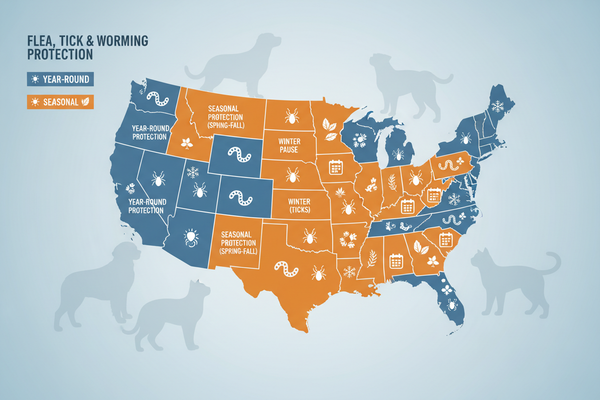
Most pet owners assume that the first frost of winter kills off fleas and ticks, giving their pets a few months of natural protection. Unfortunately, that's not how it works. Depending on where you live in the USA, flea and tick season may run for 9, 10, or even 12 months of the year — and for pets in southern states, there is no off-season at all.
Understanding when parasites are active in your specific state is the first step to keeping your dog or cat properly protected. This guide breaks it down state by state.
The Temperature Trigger: What Actually Activates Parasites
Each parasite type has a different temperature threshold — and they're lower than most people expect.
Ticks — Many tick species, including the black-legged tick (the primary carrier of Lyme disease), remain active whenever temperatures are above 40°F (4°C). That includes mild winter days in most parts of the USA. The widespread belief that ticks die off in winter is simply wrong for most of the country.
Fleas — Fleas prefer warmth and humidity, but they are masters of survival. Once a flea finds its way onto a host — a squirrel, a stray cat, or your dog — or into your home, it can thrive and multiply year-round regardless of outdoor conditions. Your climate-controlled home is a perfect flea breeding environment in the middle of January.
Heartworm — Heartworm disease is transmitted by mosquitoes. It only takes one unseasonably warm day for a mosquito to become active and transmit heartworm larvae to your pet. This is why the Companion Animal Parasite Council (CAPC) recommends year-round heartworm prevention for all pets regardless of location.
North vs South: How Geography Changes the Risk
In southern states like Florida, Texas, Louisiana, Georgia, and South Carolina, there is genuinely no off-season. The consistent warmth and humidity create a year-round breeding environment for fleas, ticks, and mosquitoes. Dogs and cats in these states need continuous, uninterrupted protection every month of the year.
In northern states, peak flea and tick activity typically runs from April through November. However, mild shoulder seasons — warm days in March and December — create gaps that catch pet owners off guard when they've already stopped their prevention routine.
The practical takeaway from both scenarios is the same: year-round prevention is simpler, safer, and ultimately cheaper than seasonal prevention with gaps.
Why Year-Round Prevention Is Always the Right Call
There are three reasons veterinary guidelines consistently recommend year-round parasite prevention regardless of season or location:
The protection gap problem. If you stop treatment in November and restart in April, your pet is unprotected during shoulder months when temperatures fluctuate above and below freezing. A single warm week in February is all a tick needs.
Indoor flea infestations don't follow the calendar. Once a single flea enters your home — on your dog, your clothing, or a visiting animal — your carpets, furniture, and bedding provide a perfect warm environment for an infestation to establish and explode. Indoor flea infestations in winter are far more common than most people realise.
Intestinal worms and heartworm don't hibernate. Roundworms, hookworms, and whipworms can survive in soil year-round and be tracked into your yard by wildlife at any time. Heartworm larvae can be transmitted any time mosquitoes are active — which in many states is most of the year.
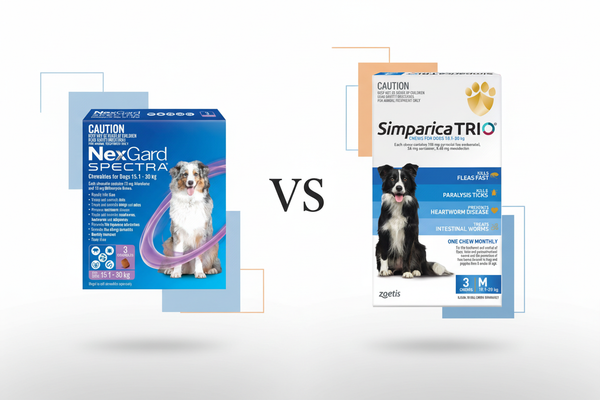
For products that cover all of these risks in a single monthly dose, see our guides on Simparica Trio and NexGard Spectra vs Simparica Trio.
Flea, Tick & Heartworm Season by State: 2026 Guide
The table below shows peak flea and tick activity by state, alongside heartworm and worming season recommendations. "Peak" refers to when parasites are most active — but prevention should be a 12-month commitment regardless of your state.
| State | Flea & Tick Peak Season | Heartworm & Worming |
|---|---|---|
| Alabama | Year-Round | Year-Round |
| Alaska | May – October | Year-Round |
| Arizona | April – October | Year-Round |
| Arkansas | April – October | Year-Round |
| California | Year-Round | Year-Round |
| Colorado | March – September | Year-Round |
| Connecticut | April – October | Year-Round |
| Delaware | March – December | Year-Round |
| Florida | Year-Round | Year-Round |
| Georgia | Year-Round | Year-Round |
| Hawaii | Year-Round | Year-Round |
| Idaho | April – August | Year-Round |
| Illinois | April – September | Year-Round |
| Indiana | April – September | Year-Round |
| Iowa | March – November | Year-Round |
| Kansas | March – September | Year-Round |
| Kentucky | March – December | Year-Round |
| Louisiana | Year-Round | Year-Round |
| Maine | April – November | Year-Round |
| Maryland | March – November | Year-Round |
| Massachusetts | March – November | Year-Round |
| Michigan | March – November | Year-Round |
| Minnesota | April – November | Year-Round |
| Mississippi | Year-Round | Year-Round |
| Missouri | March – November | Year-Round |
| Montana | April – July | Year-Round |
| Nebraska | April – October | Year-Round |
| Nevada | Year-Round | Year-Round |
| New Hampshire | April – November | Year-Round |
| New Jersey | March – November | Year-Round |
| New Mexico | April – October | Year-Round |
| New York | March – November | Year-Round |
| North Carolina | April – November | Year-Round |
| North Dakota | April – September | Year-Round |
| Ohio | March – December | Year-Round |
| Oklahoma | April – September | Year-Round |
| Oregon | Year-Round | Year-Round |
| Pennsylvania | April – October | Year-Round |
| Rhode Island | March – December | Year-Round |
| South Carolina | Year-Round | Year-Round |
| South Dakota | April – November | Year-Round |
| Tennessee | April – September | Year-Round |
| Texas | Year-Round | Year-Round |
| Utah | March – July | Year-Round |
| Vermont | April – September | Year-Round |
| Virginia | April – September | Year-Round |
| Washington | Year-Round | Year-Round |
| West Virginia | April – October | Year-Round |
| Wisconsin | May – November | Year-Round |
| Wyoming | March – July | Year-Round |
Which States Have the Longest Flea & Tick Seasons?
Fourteen states have year-round flea and tick activity: Alabama, California, Florida, Georgia, Hawaii, Louisiana, Mississippi, Nevada, Oregon, South Carolina, Texas, Washington, and parts of the Gulf Coast corridor. Pet owners in these states should never take a break from parasite prevention — there is no safe window.
States with the shortest peak seasons (Montana, Wyoming, Utah, Idaho, Vermont, Alaska) still see 3–6 months of meaningful parasite activity, and heartworm prevention remains a year-round recommendation even in these colder climates due to the unpredictability of mosquito activity in shoulder seasons.
Choosing the Right Prevention for Your State
The right product depends on what parasites are most prevalent in your region and whether you want a single all-in-one product or separate treatments.
For states with year-round flea, tick, and heartworm risk (Florida, Texas, California, the Southeast) — an all-in-one monthly product like Simparica Trio or NexGard Spectra is the most convenient option. One chew covers everything. See our NexGard Spectra vs Simparica Trio comparison to choose between them.
For states with heavy tick seasons but shorter flea windows (Northeast, Midwest, Mountain states) — a long-acting tick treatment like Bravecto (12-week protection) paired with a heartworm preventative like Heartgard Plus is a practical combination. See our Bravecto vs Simparica Trio comparison for a full breakdown.
For cats in any state — Revolution Plus or Bravecto Plus provide comprehensive protection. See our Revolution Plus vs Bravecto Plus comparison to choose the right option for your cat.
For a full overview of tick prevention options and which tick species each product covers by region, see our tick prevention for dogs guide.
Prevention Is Always Cheaper Than Treatment
A heartworm infection requires months of expensive treatment, restricted exercise, and significant risk to your dog. A flea infestation can take weeks to eliminate and may require treating your entire home. A single tick bite can transmit Lyme disease, ehrlichiosis, or Rocky Mountain spotted fever — all of which are costly and difficult to treat.
A monthly dose of a trusted preventative costs a fraction of any of those outcomes. And when you order through an Australian retailer like Smartway Pet Supplies, you're paying significantly less than US vet prices for the exact same genuine, manufacturer-sealed products — no prescription required. See why pet medications are cheaper from Australia for the full explanation.
Smartway Pet Supplies
Pet Care Specialist — Smartway Pet Supplies
A member of the Smartway team, writing practical guides to help US and Canadian pet owners choose the right parasite prevention products for their pets.
About Smartway Pet Supplies →